
Pirate Last Names
When a sailor signed pirate articles, their old identity ended. Discover 120+ authentic pirate last names, rigging trade surnames, ocean myth epithets, and fallen aristocracy titles for characters and stories.
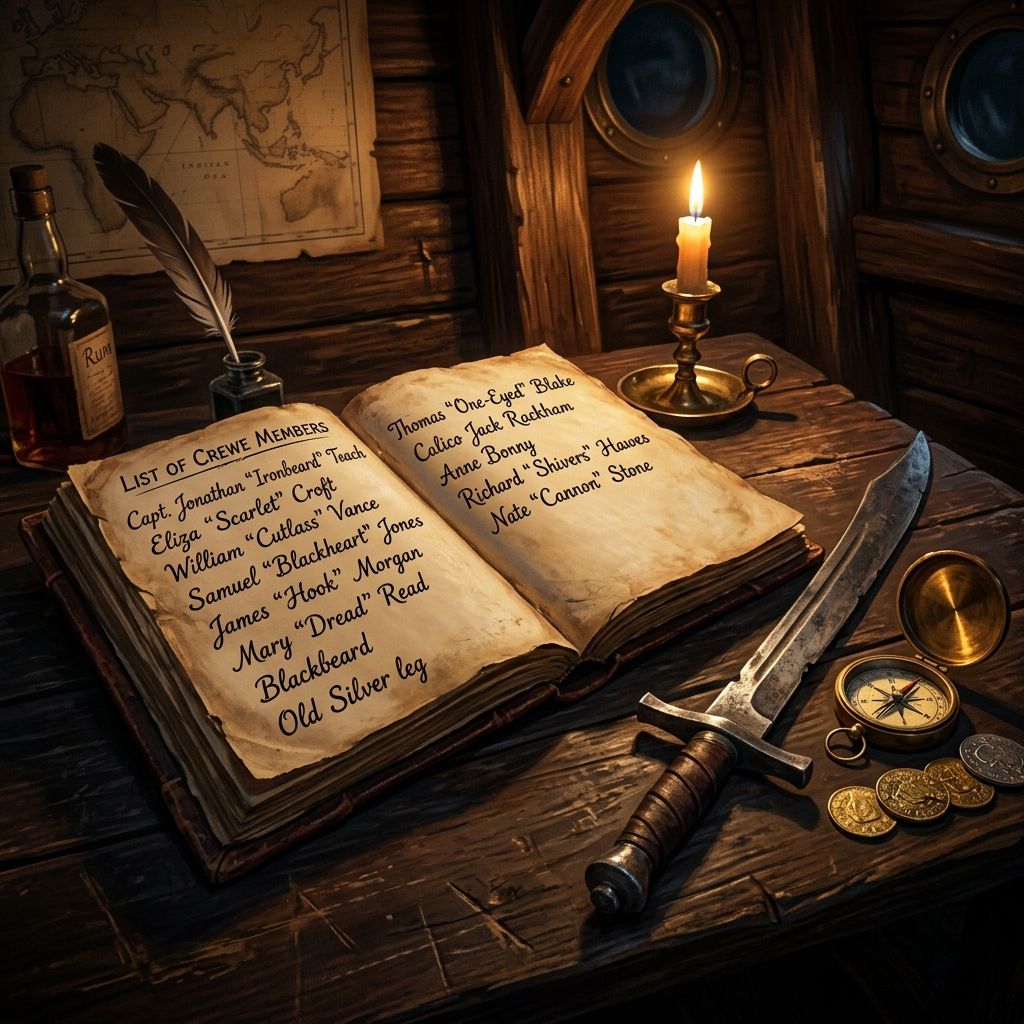
Pirate last names served as aliases to shield family members from British Admiralty treason trials and Crown land confiscations. These surnames generally fall into two categories: grounded Anglo-Celtic family names (Blackwood, Vance, Graves) or compound maritime epithets derived from shipboard labor, weather, and naval combat (Storm-Wake, Flintlock, Kraken-Bane).
Top Picks & Featured Names
Standout outlaw trade surnames, combat epithets, and weather monikers.
Shipboard Trade & Rigging Surnames
Aliases derived from the specialized nautical labor performed aboard ocean-going vessels.
Deep Sea & Mythological Surnames
Evocative monikers connecting outlaws to ancient maritime folklore and ocean depths.
Weapons & Gunpowder Combat Surnames
Aggressive titles earned in naval boarding actions, cannon duels, and close combat.
Fallen Aristocracy & Lineage Surnames
Noble English, Scottish, and French surnames for former gentlemen who turned to piracy.
Weather, Squalls & Tempest Surnames
Titles linking a mariner’s temperament to unpredictable ocean climates and storms.
Documented Golden Age Pirates: Legal Names vs. Shipboard Aliases
Archival analysis showing how real 18th-century outlaws managed identity and monikers.
| Historical Figure | Legal Recorded Surname | Shipboard Moniker | Archival Mechanism |
|---|---|---|---|
| Edward Teach (Thatch / Thache) | Teach / Thatch | Blackbeard | Physical trait weaponized for psychological intimidation during ship boardings. |
| John Rackham | Rackham | Calico Jack | Derived from his flamboyant habit of wearing lightweight calico cloth jackets. |
| Bartholomew Roberts | Roberts (born John Roberts) | Black Bart (posthumous) / Bartholomew | Adopted a new Christian name upon turning pirate to protect his Welsh family. |
| Major Stede Bonnet | Bonnet | The Gentleman Pirate | Kept his legal aristocratic surname; wealthy sugar planter who abandoned family estate. |
| Captain William Kidd | Kidd | Captain Kidd | Operated under royal privateer commissions and retained his legal Scottish name throughout. |
| Sir Henry Morgan | Morgan | Admiral Morgan | Prominent Welsh privateer operating under English commissions; later knighted. |
How to Choose a Believable Pirate Surname for Fiction
Whether writing historical fiction, worldbuilding a fantasy archipelago, or naming a D&D rogue, follow these six criteria to create grounded, memorable surnames.
Ground the Surname in Shipboard Trade or Origin
Derive names from real maritime labor. Good: Silas Cooper. Weak: Silas Darkdestroyer. Rationale: Historical sailors were known by their trades, giving names an authentic period feel.
Reserve Aristocratic Names for Disgraced Gentry
Use noble Norman-English surnames for characters with fallen status. Good: Sterling, Pendleton. Weak: Sir Death. Rationale: Wealthy second sons and disgraced naval officers turned to piracy to escape family debt.
Balance Single-Word Realism vs Compound Monikers
Use single-word family names for serious drama and hyphenated compounds for folk heroes. Good: Vance vs Storm-Wake. Rationale: Historical chronicles record formal surnames, while sailor folklore records colorful nicknames.
Match the Surname to the Character’s Cultural Background
Align family names with regional shipping ports. Good: Cormac O’Malley for an Irish privateer. Weak: Random syllables without linguistic roots. Rationale: Real crews were international mixes of Cornish, Welsh, Irish, French, and African sailors.
Ensure Spoken Rhythm with the Given Name
Pair short first names with longer surnames for vocal balance. Good: Jack Blackwood. Weak: Bartholomew Blackwood-Storm. Rationale: Alternating short and long syllables makes the full character title roll off the tongue naturally.
Avoid Overused Modern Video Game Cliches
Steer clear of hyperbolic terms like Blood, Shadow, or Death. Good: Flintlock, Ironjaw. Weak: Deathblade. Rationale: Period-authentic names sound intimidating without descending into cartoon melodrama.
How This Surname Directory and Generator Work
The exact arrays and mathematical models behind our pirate surname tools.
This directory provides 60 curated surnames sorted into five structural categories. In our interactive Pirate Name Generator (/pirate-name-generator), the surname engine queries a larger data set of 200 last names categorized across six styles: male (40), female (40), funny (30), dark (30), D&D (30), and fantasy (30). When combined with the 270 first names in our database, the engine generates 9,400 unique pairings strictly within their matching categories, and over 54,000 combinations across cross-category sampling. The generator executes entirely in your browser using standard Math.random() indexing without making external server calls, running generative AI models, or tracking user identity.
200 Distinct Surnames
Six Archetype StylesCategorized across historical naval trades, fallen aristocracy, combat weapons, weather phenomena, and tabletop fantasy lore.
9,400 Standard Pairings
Within-Category MatrixPairs 270 given names with 200 surnames, plus random prefix titles (Captain, Calico) and descriptive suffixes (the Bold, the Grim).
Instant Local Browser Math
Deterministic JS EngineNo server-side database lookups or external API latency. Generates names instantly and works fully offline.
Why Real Pirates Needed Aliases
Signing pirate articles was a capital crime under the British Piracy Act of 1698. If an outlaw was captured and convicted, the Crown confiscated all family land and property, leaving parents and siblings destitute. Sailors took aliases (noms de guerre) to sever their legal ties to family estates before taking to the sea.
Four Worked Surname Examples & Character Archetypes
Deconstructing standout pirate surnames to illustrate distinct narrative backgrounds.
Jack Blackwood
Fallen Aristocracy RogueA noble English surname suggesting a disgraced younger son of gentry who fled gambling debts in London to command a smuggling schooner in the Bahamas.
Thomas Iron-Smith
Shipboard Trade VeteranReflects an experienced ship’s armorer who served ten years in the Royal Navy forging cannon carriages before mutinying to join a buccaneer fleet.
Caleb Storm-Wake
Weather Compound MonikerA descriptive folk moniker given to a legendary helmsman famed for successfully steering overloaded sloops through Caribbean hurricane seasons.
Gideon Flintlock
Close-Quarters BoarderDerived from a master gunner who famously kept four loaded flintlock pistols strapped across their chest on bandoliers during boarding actions.
Where to Use Pirate Surnames & Creative Formats
Selecting surnames suited for novels, tabletop campaigns, and multiplayer video games.
- Historical Fiction & NovelsStick to realistic 18th-century Anglo-Celtic surnames (Graves, Vance, Sterling) or authentic trades (Cooper, Fletcher). Grounding characters in real period naming conventions enhances historical verisimilitude.
- Tabletop RPGs (D&D / Pathfinder)Tabletop campaigns thrive on evocative compound surnames (Storm-Wake, Kraken-Bane, Ironjaw). These compound titles immediately convey class features, favored weapons, or supernatural pacts to the gaming group.
- Sea of Thieves Character GamertagsKeep surnames under 15 characters to ensure clean visibility above your pirate’s head in game lobbies and alliance ship decks.
- Blox Fruits & Roblox CrewsEnsure chosen surnames avoid filtered words in the Roblox chat engine. Grounded trade names like Iron-Smith or Ship-Wright pass filters cleanly.
Four Common Mistakes When Choosing a Pirate Surname
Avoid these storytelling and worldbuilding traps before finalizing your character.
- Mistake: Cartoonish HyperboleFix: Avoid names like "Lord Deathblood". Instead, choose understated period names like "Graves" or "Flintlock" which sound genuinely dangerous rather than comical.
- Mistake: Anachronistic Modern SurnamesFix: Steer clear of 20th-century family names or modern technical terms. Consult historical shipping manifests from ports like Bristol, Plymouth, or Kingston for period accuracy.
- Mistake: Syllable ClutterFix: Avoid triple-hyphenated titles that trip up players at the table. A tight two-syllable surname carries far more authority.
- Mistake: Disconnect with Shipboard RoleFix: Align the surname with what the pirate actually does aboard ship. A master navigator named "Anchor-Scrubber" creates unintended comedy unless that is your narrative goal.
Explore Related Name Lists
Discover captain titles, female corsair histories, and complete character profiles.
Pirate Captain Names
Commanding captain names, fleet monarchs, and pirate lord titles.
Female Pirate Names
150+ female pirate names, historical profiles, and corsair titles.
Pirate Names List
The master index of male, female, and fantasy pirate names.
Character Name Generator
Create full pirate characters with D&D class & backstory tags.
Frequently Asked Questions
Archival answers regarding Golden Age pirate surnames, aliases, and fictional worldbuilding.